
Accent Wall Ideas for California Homes: Los Angeles, San Diego, and San Francisco
A thoughtfully designed accent wall can give a room the detail it has been missing. It can frame a seating area, bring warmth to a bedroom, or turn a plain television wall into a more intentional part of the home.
The right design starts with the space itself: its proportions, natural light, existing finishes, and the way people use it. A pale oak feature wall might complement an airy living room, while painted molding can bring definition to a dining room with traditional architectural details.
For homeowners in Los Angeles, San Diego, and San Francisco, here are several ways to approach an accent wall—and how to start a conversation with a regional design and installation partner.
Start With the Wall That Matters Most
Before choosing a material or paint color, decide what the wall should accomplish.
In a living room, the natural focal point might be the fireplace, television, or main seating area. In a bedroom, it is often the wall behind the headboard. In an open-plan home, an accent wall can help define a dining space without adding a physical partition.
Look for a wall that makes sense from the room’s main entrance and usual seating positions. Consider how windows, doors, outlets, and vents will affect the layout.
A successful feature wall should feel connected to the room, with enough surrounding space for its texture or pattern to be appreciated.
Los Angeles: Architectural Detail With a Clear Focal Point
For a Los Angeles home, consider an accent wall that connects the furniture, lighting, and existing architecture.
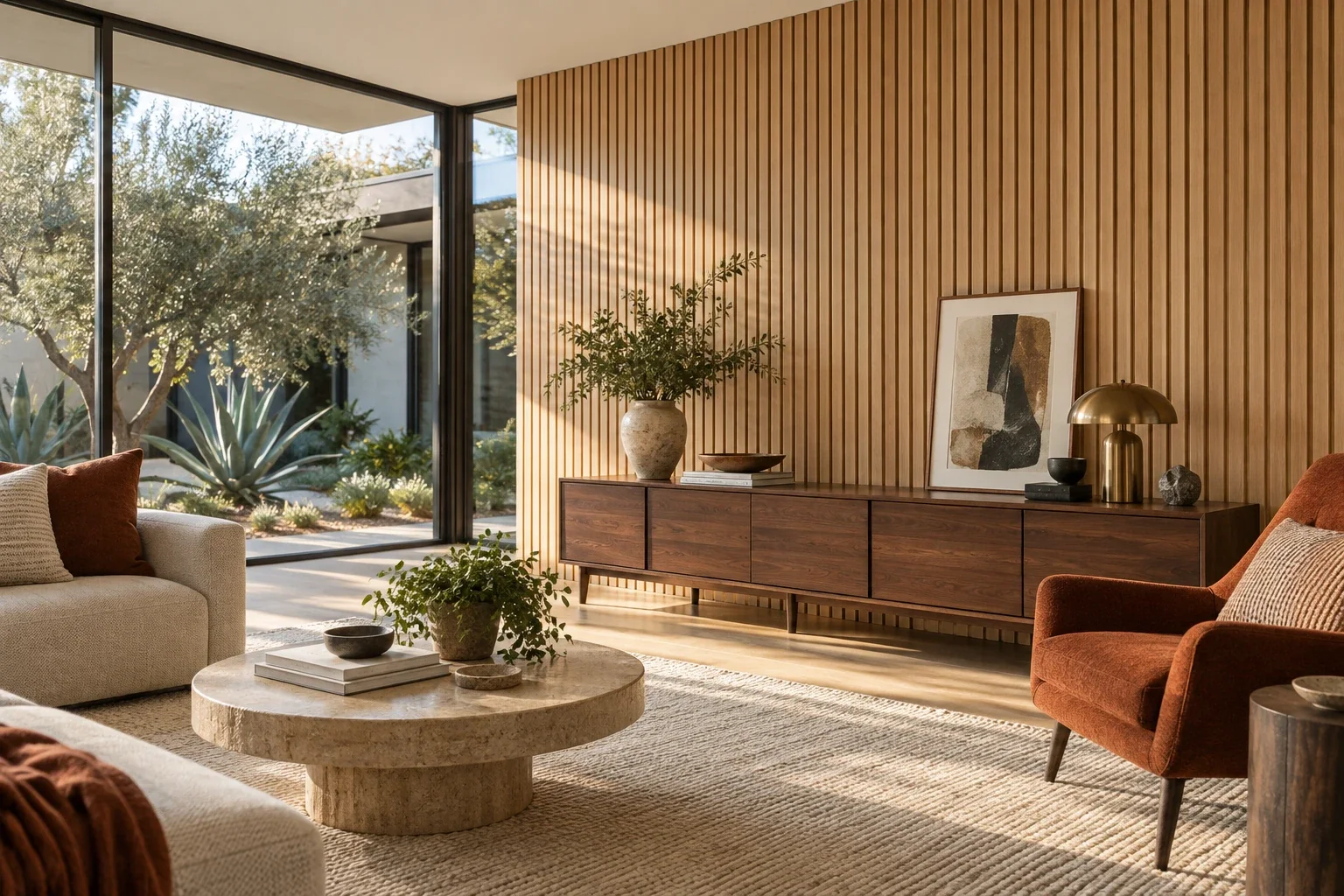
In a contemporary living room, vertical wood slats can introduce warmth alongside glass, stone, and smooth painted surfaces. In a more traditional setting, restrained wall molding can create structure without overwhelming the room.
A television wall deserves particular attention. Planning the screen, storage, cable access, and lighting together can help the finished wall feel balanced even when the television is turned off.
Our regional partner, Accent Walls Los Angeles, lists custom accent walls, media walls, fireplace features, built-in cabinetry, and finish carpentry among its services. Its website also describes options including wood slats, board-and-batten, decorative panels, and limewash finishes.
For a productive first conversation, bring photographs of the room, approximate wall dimensions, and a few examples of the finishes you like. Explain whether your priority is visual impact, storage, or a combination of both.
San Diego: Light, Texture, and Natural Warmth
For a relaxed San Diego interior, a useful design direction is to keep the color palette simple and let texture provide the interest.
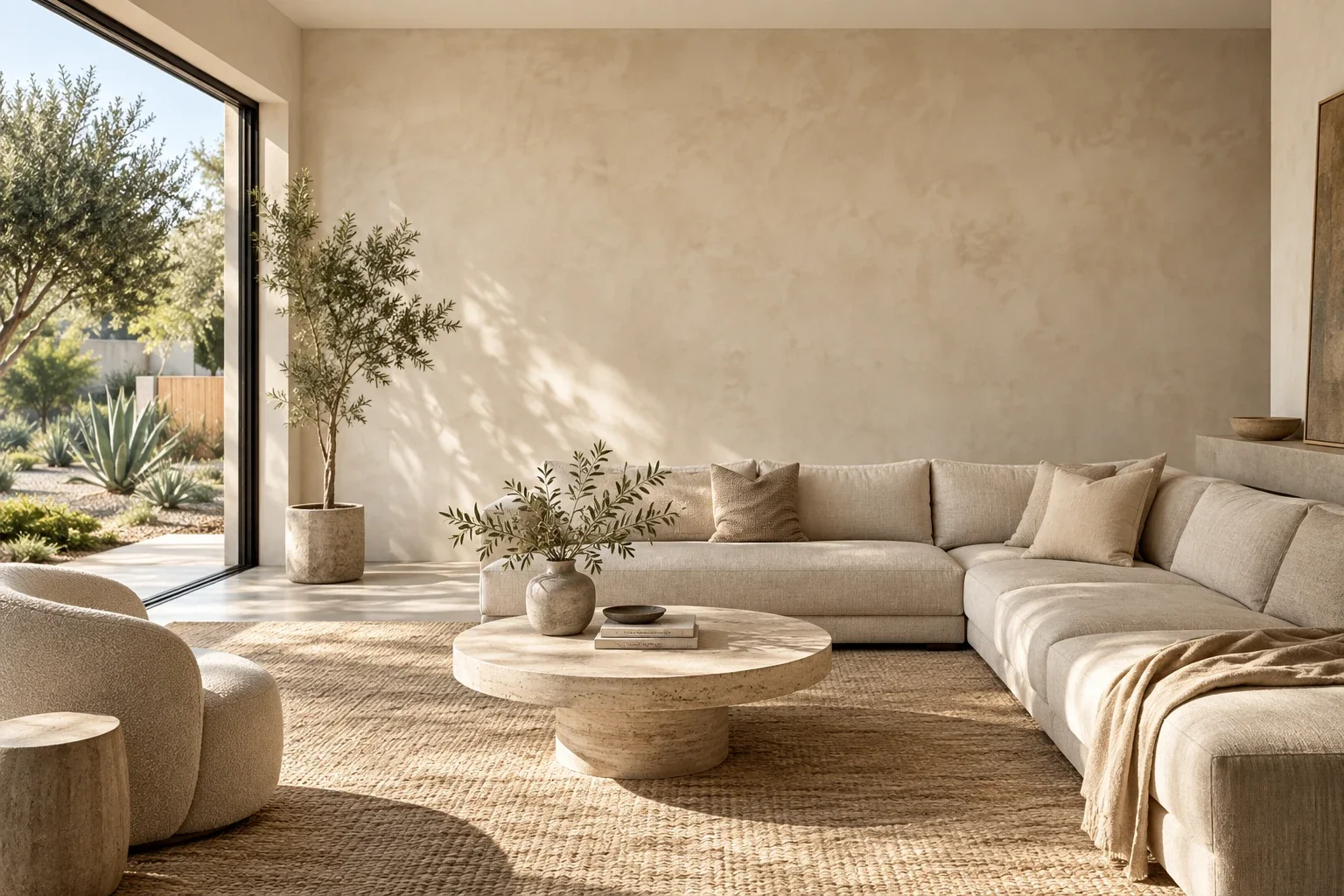
A warm off-white or sandy limewash finish can create subtle movement across a wall. Pale wood slats can add depth, while painted board-and-batten can give a bedroom a more structured backdrop.
These approaches do not require a room full of decorative objects. A textured wall, comfortable furniture, and a few carefully chosen materials can create a complete composition.
When choosing finishes, view samples in the actual room. A pale beige can appear warmer in afternoon sunlight, while the same finish may look more muted in a shaded space. Wood samples should also be compared with the flooring so that their undertones work together.
Homeowners exploring a local project can connect with our San Diego accent wall partner to discuss their location, preferred design, and the scope of work available.
San Francisco: Proportion, Character, and Thoughtful Contrast
For a San Francisco interior, begin with the architectural details already in the room.
Where there are existing baseboards, ceiling trim, or distinctive door casings, a new wall treatment should relate to those elements. Picture-frame molding can be designed around them, with spacing and profiles chosen to suit the room.
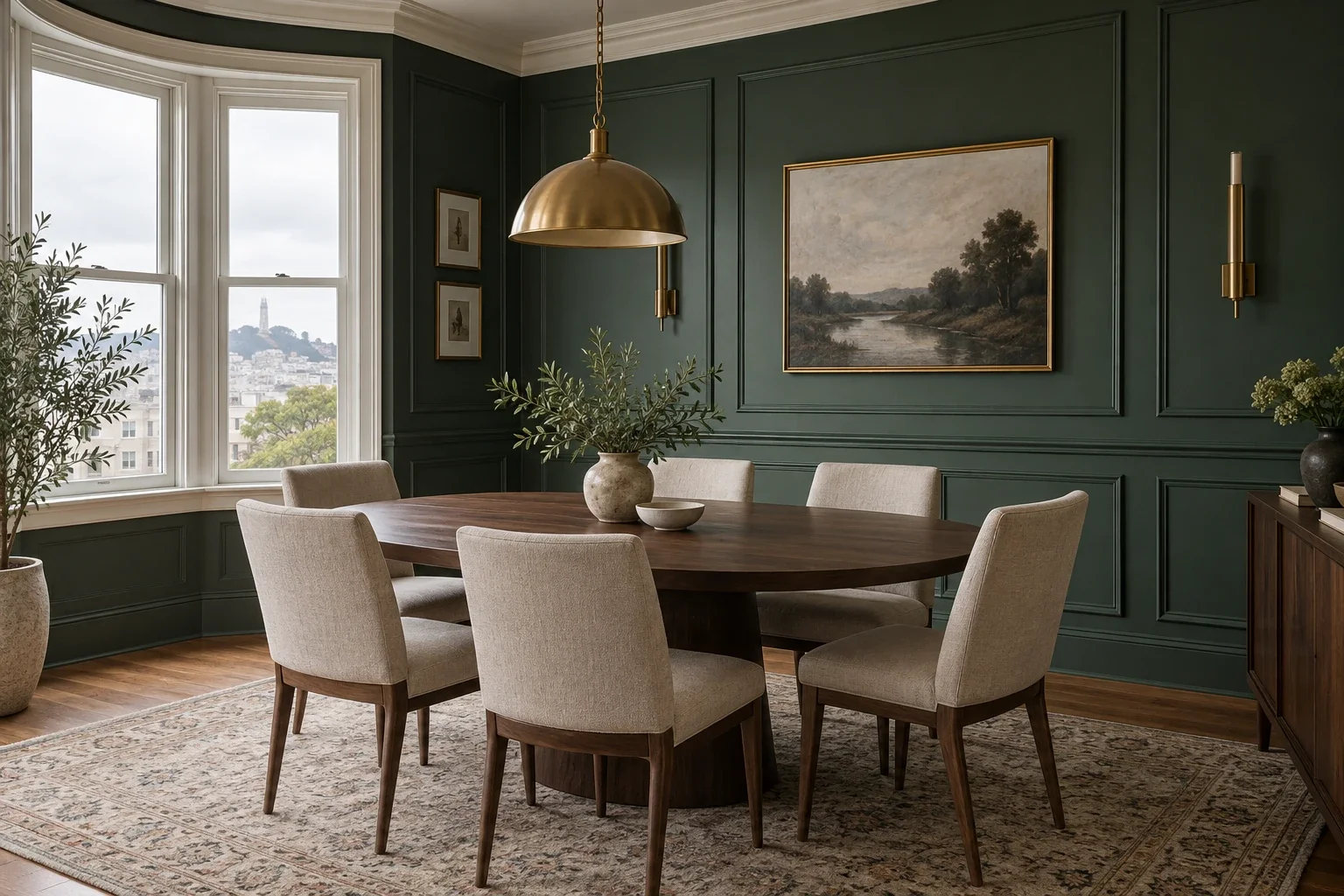
A deep charcoal, muted green, or dark blue wall can create a strong backdrop for lighter furniture. For a softer effect, painting the molding and wall in the same warm neutral keeps attention on the shadows and proportions.
In a compact room, shallow wall treatments are worth considering. Applied molding or a textured finish can add interest while taking up very little depth. More substantial panels or cabinetry require closer attention to circulation and furniture placement.
To explore a project locally, contact our San Francisco accent wall partner and share photographs of the space, its existing trim, and the wall you want to update.
Five Accent Wall Ideas to Consider
1. Limewash for Soft, Tonal Texture
Limewash creates a softly varied surface rather than a uniform painted appearance. It can work well when you want visual depth without a strong geometric pattern.
Consider it behind a sofa or bed, where the finish can remain visible across a generous area. Ask about substrate preparation and sample applications before selecting the final color and effect.
2. White Oak Slats for Warmth and Rhythm
Vertical white oak slats introduce a repeating pattern and visible wood grain.
The details matter: slat width, spacing, backing color, and the way the installation meets corners and baseboards all influence the result. Plan these transitions early, especially where outlets or switches interrupt the wall.
3. Board-and-Batten for a Defined Bedroom Backdrop
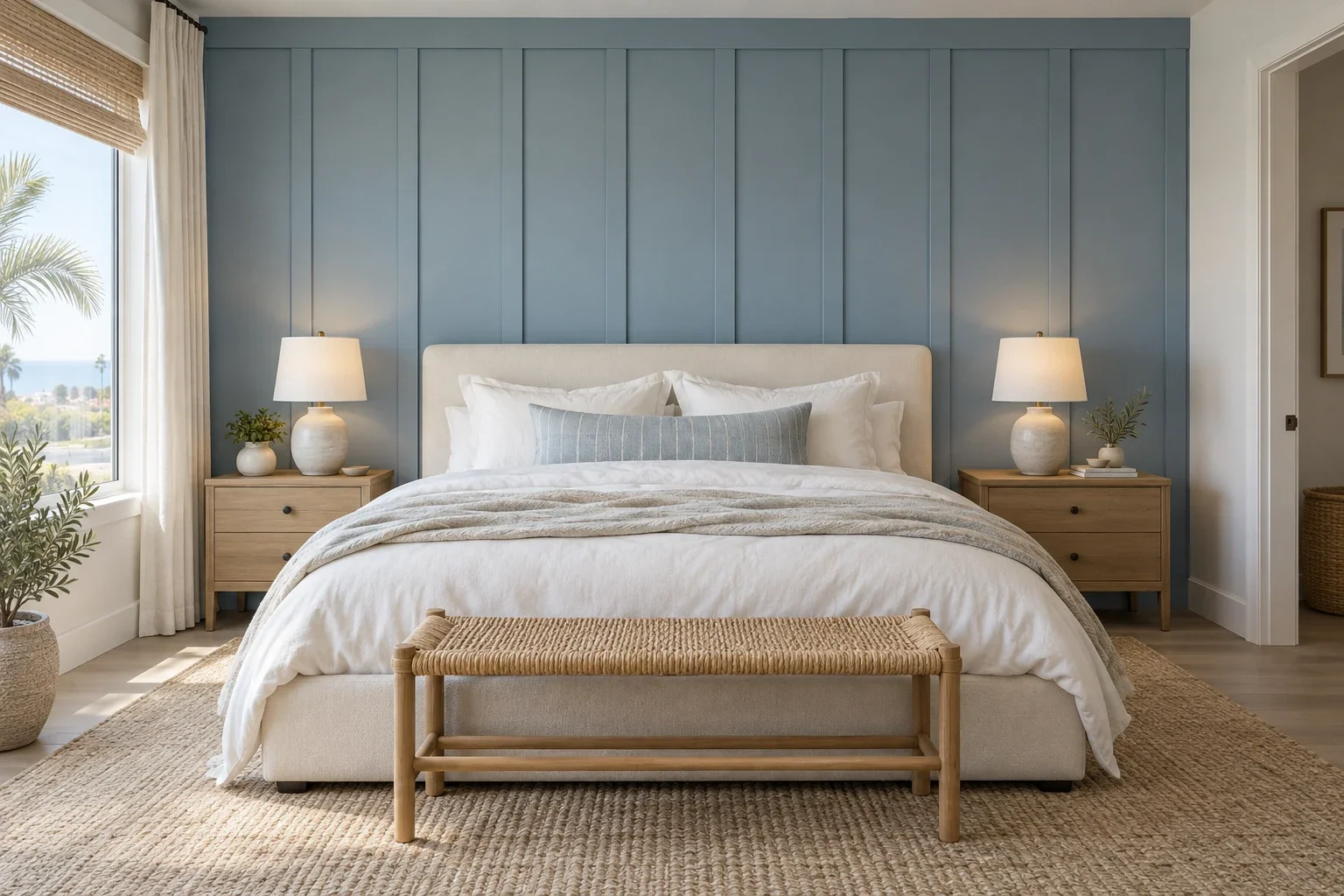
Board-and-batten uses flat boards and raised strips to create an orderly wall pattern. Behind a bed, it can provide enough architectural detail that little additional decoration is needed.
Set the layout around the bed and bedside furniture. The wall should look balanced with the furniture in place, not just when viewed as an empty surface.
4. Dimensional Panels With Integrated Lighting
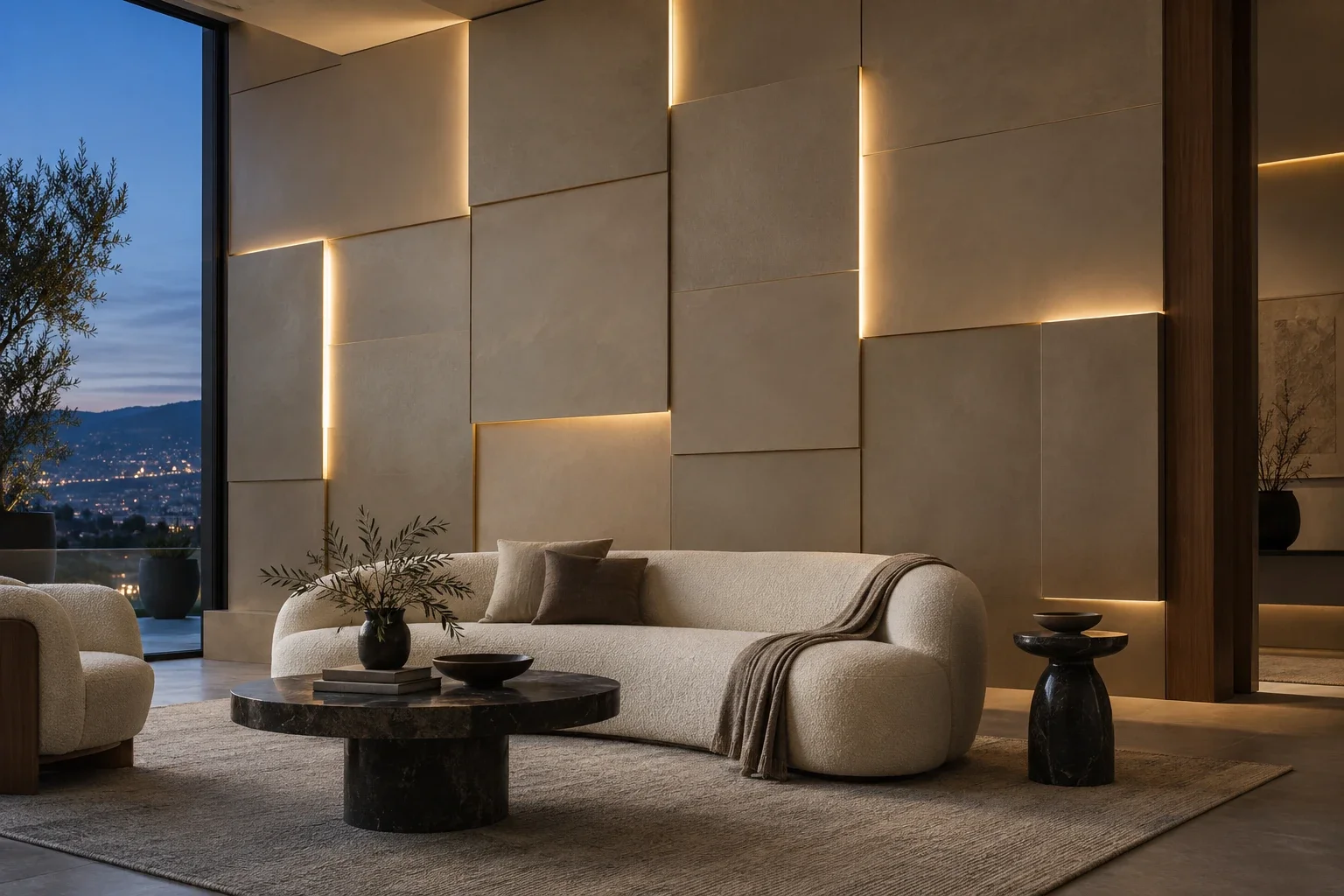
Raised decorative panels can create depth through changes in surface level and shadow. Concealed lighting can emphasize selected edges and give the wall a different character after dark.
Resolve panel depth, wiring routes, dimming, and future access before installation. Request a lighting sample or demonstration so you can judge the effect from normal seating positions.
5. Dark Picture-Frame Molding for Contrast
Picture-frame molding adds a traditional architectural reference that can also suit a modern room.
Painted in a dark, unified color, the wall becomes a backdrop for wood furniture, pale upholstery, or artwork. Keep the rectangles proportionate to the wall and leave consistent space around doors, corners, and ceiling trim.
How to Choose an Accent Wall Installer
Inspiration photographs help establish a direction, but a clear proposal is what turns that direction into a workable project.
When comparing installers, ask for examples that match the type of wall you want. A wood slat installation involves different detailing from a painted molding wall or a media wall with cabinetry.
Before agreeing to the work, clarify:
Design: Will you receive a measured layout or visual concept?
Materials: Which products, profiles, and finishes are included?
Preparation: How will existing texture, uneven surfaces, or damaged paint be handled?
Scope: Does the proposal include painting, trim adjustments, cleanup, and any electrical coordination?
Details: How will corners, outlets, baseboards, and access points be finished?
Schedule and price: What is included, what is excluded, and how are changes approved?
For walls that involve lighting, televisions, fireplaces, or built-in storage, discuss those components at the beginning. Their placement can affect the entire design.
Plan Your California Accent Wall
The most useful starting point is a clear brief: one wall, a defined purpose, and a few references that show the atmosphere you want to create.
Whether you are considering textured plaster, natural wood, painted trim, or illuminated panels, choose a treatment that belongs with the rest of your home.
Explore our regional partners in Los Angeles, San Diego, and San Francisco to begin a conversation about your space.