
An accent wall can change how a room feels without changing everything in it. And looking ahead to 2027, some of the most interesting ideas come down to a few thoughtful decisions: where light falls, how materials meet, and what happens around the television.
Based on what we’re seeing in our projects and conversations with homeowners, here are four directions we expect to see more of in the coming year—and a few ways to make them work in your home.
1. Hidden Lighting That Makes the Wall Come Alive
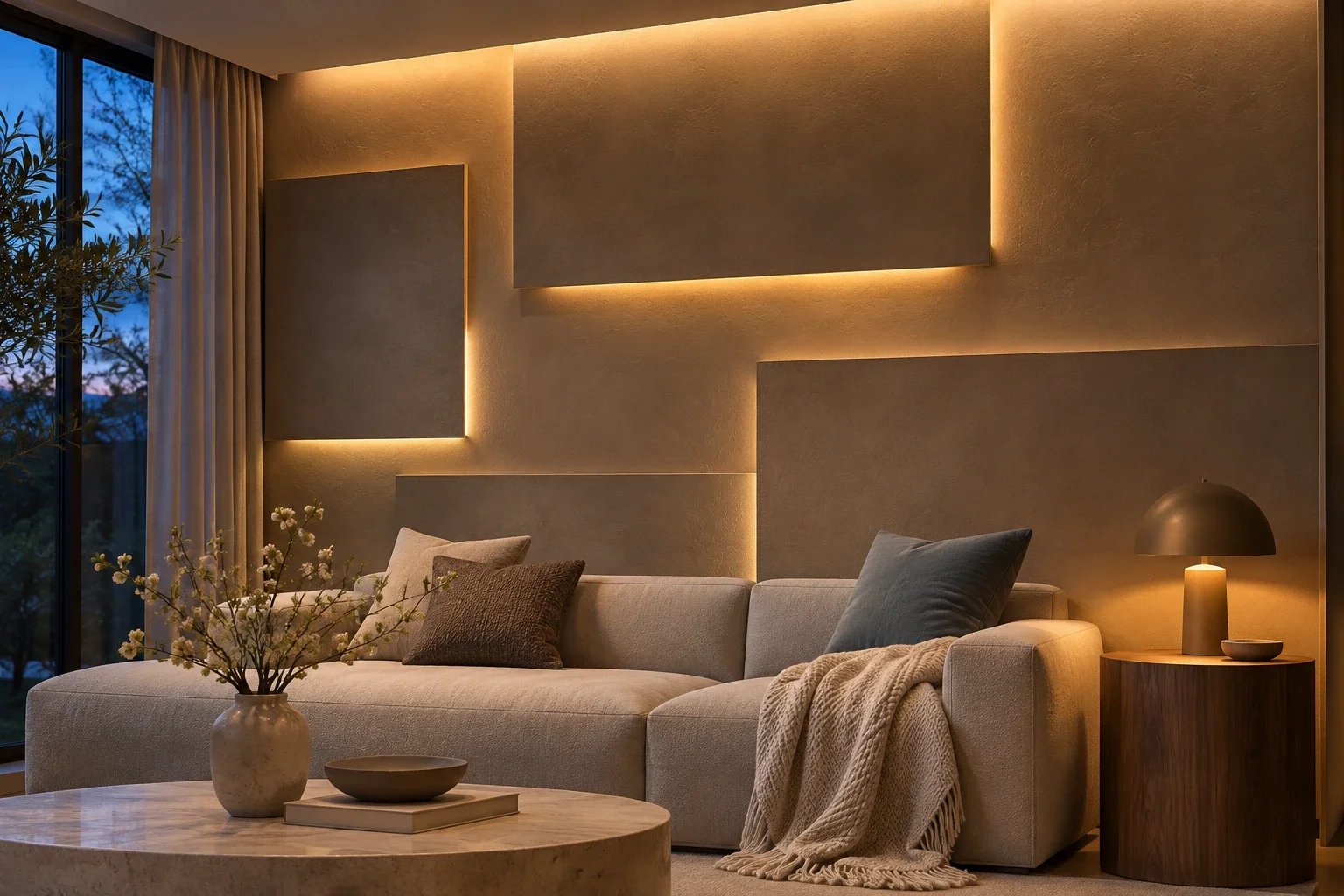
If there’s one detail we’re especially excited about for 2027, it’s integrated lighting.
A wood slat wall looks different when light catches its edges. A raised panel gains depth when a soft glow appears behind it. Even a simple painted composition can feel richer when lighting brings out its shape.
The best placement depends on the design. Concealed lighting can wash down from the top, trace a perimeter, illuminate a recessed channel, or highlight the transition between materials. A glow along the bottom can give a raised feature a floating appearance.
You don’t need to illuminate every edge. One carefully placed line of light can be enough to give the wall a second personality after sunset.
Make it work: Plan the lighting before installation. Decide where the light source will be concealed, how it will dim, and how it can be accessed later. View a sample from your normal seating position—you want to enjoy the glow without looking directly at the LEDs.
2. Mixed Materials: The Malibu Wall Approach
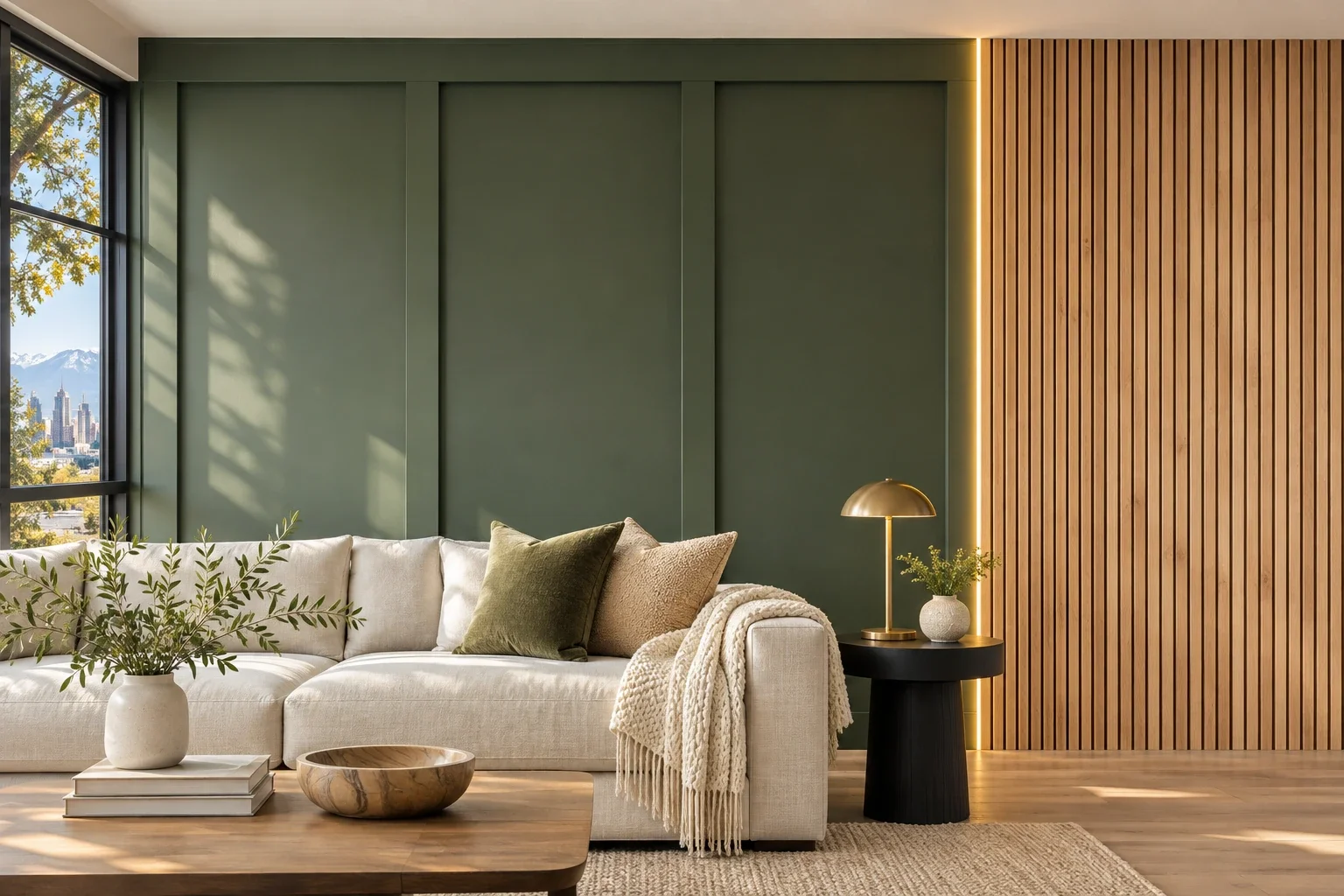
Choosing between painted trim and natural wood? They can work beautifully together.
One combination we’re watching in Denver is what we call a Malibu-style wall: a board-and-batten or decorative trim composition paired with a section of wood slat panels.
The painted area provides structure through its pattern and color. The slats introduce grain, warmth, and a finer repeating rhythm. Together, they create a wall with more variety than either treatment alone.
Picture a generous section of muted blue trim beside a narrower band of warm wood slats. Or a soft neutral geometric pattern meeting darker wood. The two sections don’t need to be equal; an intentionally uneven composition can feel more natural around furniture.
This is also a good opportunity for hidden lighting. A recessed illuminated line where the materials meet can make that transition part of the design.
Make it work: Let one material lead. Keep the second as a supporting element, and compare wood samples with your flooring and furniture before choosing a finish.
3. A TV Accent Wall Without the Full Built-In
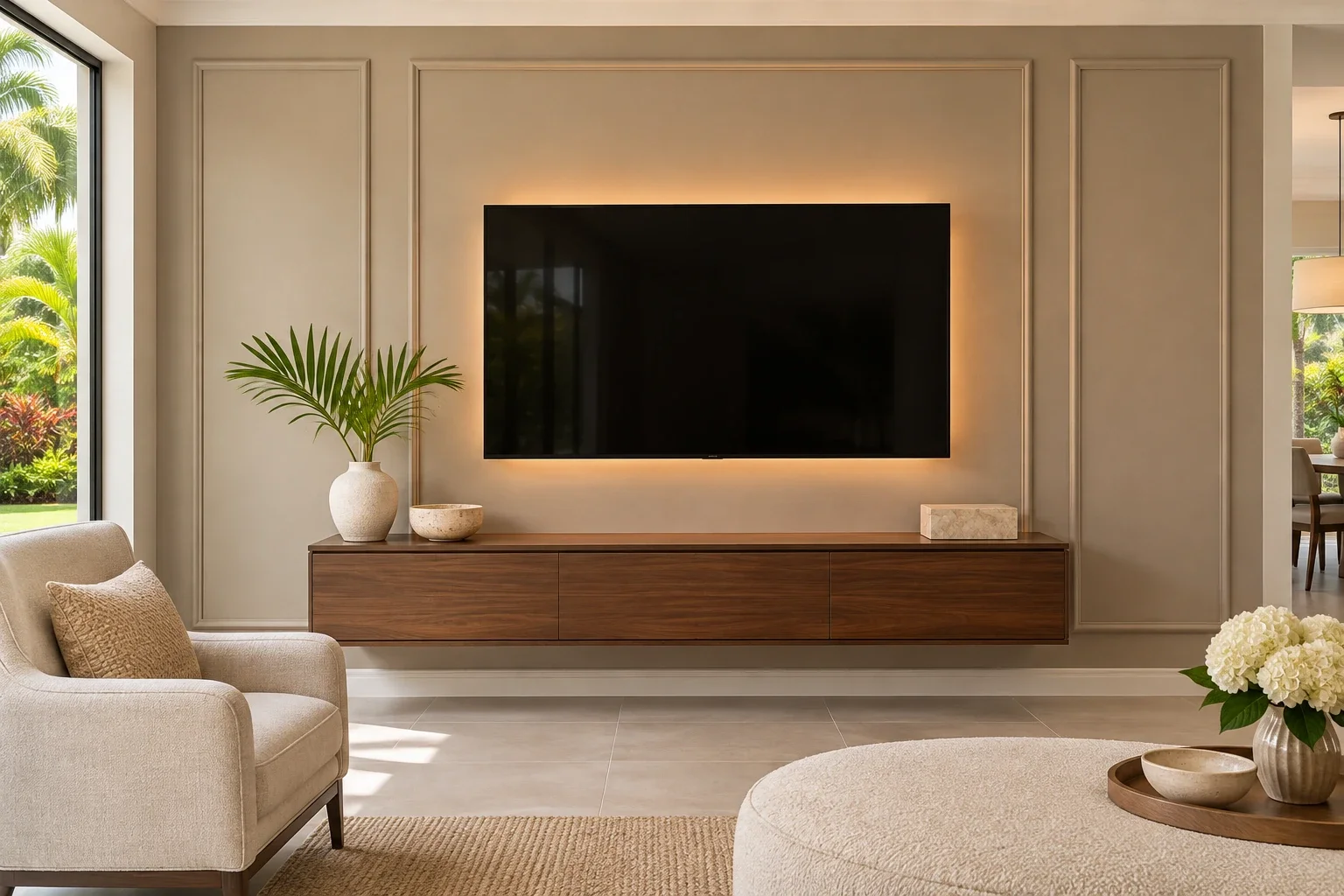
Not every television wall needs a fireplace, floor-to-ceiling cabinetry, or a complete entertainment center.
Sometimes the right combination is much simpler: a wall-mounted TV, a well-proportioned console, and an interesting surface behind them.
We’ve noticed growing interest in this approach around Tampa Bay. It gives homeowners a way to create a finished focal point while keeping the room open and the scope focused.
The console might float above the floor or stand on legs. Behind the screen, painted trim, wood slats, or decorative panels can connect the television to the rest of the room. A soft backlight behind the TV adds another layer after dark.
The key is to design the whole arrangement together. The screen, console, and wall treatment should relate to one another rather than look like three separate purchases.
Make it work: Start with the TV position and console dimensions. Plan cable routes and device storage early, then build the wall pattern around those practical decisions.
For larger compositions, explore our custom media and fireplace walls.
4. Rounded Panels: A Fresh Take on Board-and-Batten
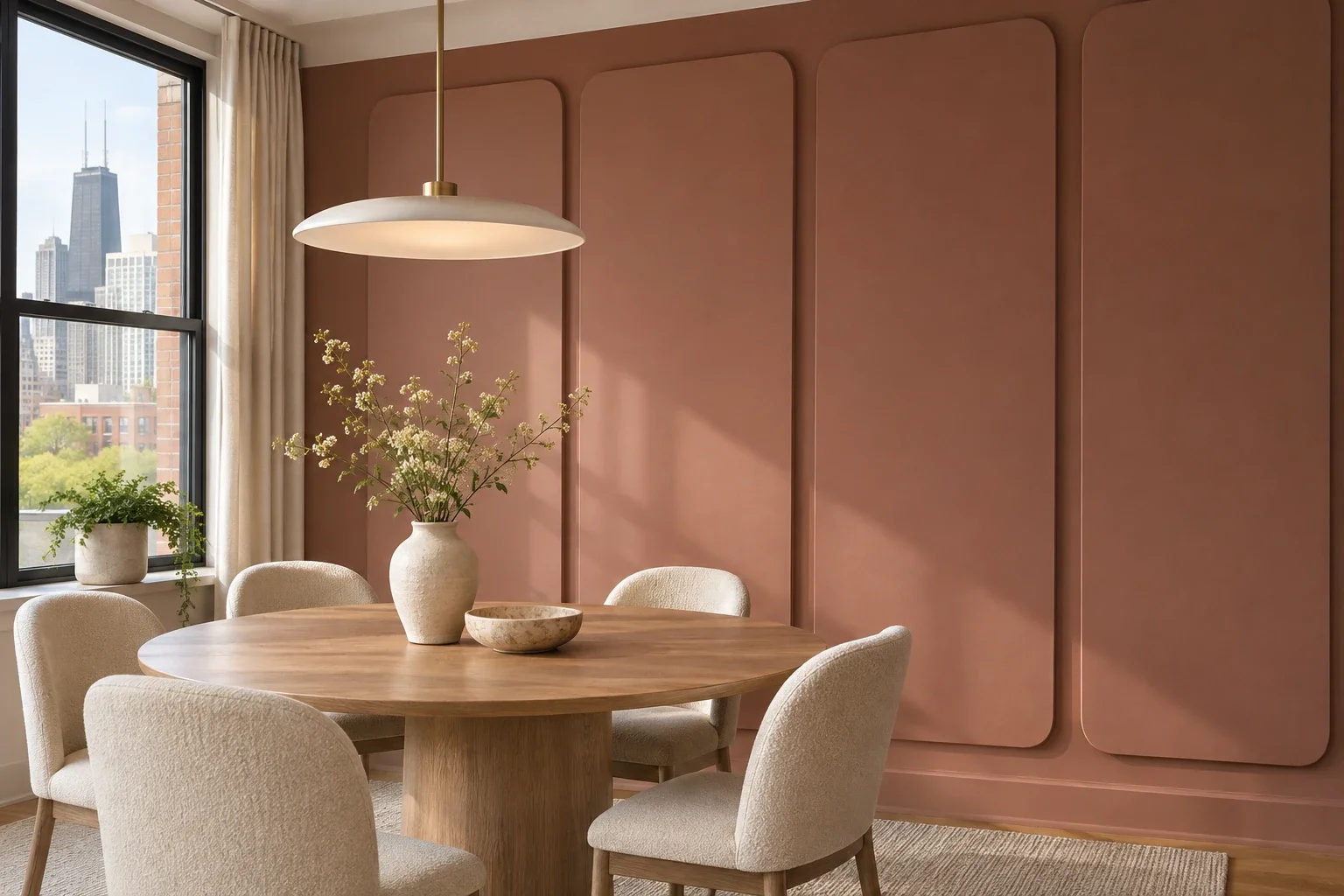
Here’s a different way to think about a patterned wall: instead of adding narrow strips of trim, add the larger shapes themselves.
Panels with rounded corners or softened edges are installed with deliberate gaps between them. Those gaps become recessed lines, creating a pattern through shadow and negative space.
Think of it as reversing the visual logic of board-and-batten. The panels take the foreground, while the channels between them define the layout.
This is a direction we’re particularly interested in for Chicago projects. It offers a contemporary alternative to traditional rectangular trim, with softer geometry that can suit a bedroom, dining area, or living room.
Paint the panels and background the same color for a subtle effect, or introduce a restrained contrast to make the pattern more visible. A straightforward layout using standard paint-grade materials can also help keep the project approachable, although curved detailing and finishing will affect the price.
Make it work: Ask to see a sample showing the panel edge and gap width. Those small details determine whether the finished wall feels soft and sculptural or busy and heavily outlined.
Which Idea Belongs in Your Home?
Start with what you want the room to do differently.
Feel more inviting in the evening? Explore concealed lighting.
Bring warmth to a painted wall? Mix decorative trim with wood slats.
Make the television area feel finished? Coordinate a console and accent wall.
Add pattern with softer edges? Consider rounded panels and recessed gaps.
You can combine these ideas, but you don’t need all four. One strong material choice and a thoughtful lighting detail may be enough.
Before you begin, take a straight-on photo of your wall, note its approximate dimensions, and save two or three examples you like. Include the furniture you plan to keep. That gives your design a useful starting point: your actual home.
Explore our completed wall and built-in projects for inspiration, or request a free estimate and design visualization to start planning your 2027 transformation.