Painted Built-Ins vs. TFL Cabinetry: Which Construction Method Is Right for Your Home?
Custom built-ins do not all use the same materials or construction process. The right method depends on the style of the room, the required architectural details, the type of storage, the preferred finish, and the project budget.
At Custom Wall Design, we work with two proven construction methods. The first is traditional painted cabinetry made from plywood and MDF. The second is modern TFL cabinetry made from factory-finished decorative panels, often referred to as melamine panels.
Both methods produce fully custom furniture designed around the dimensions and function of your room. The difference lies in the materials, appearance, fabrication process, and types of designs each method supports best.
What Are Painted Custom Built-Ins?
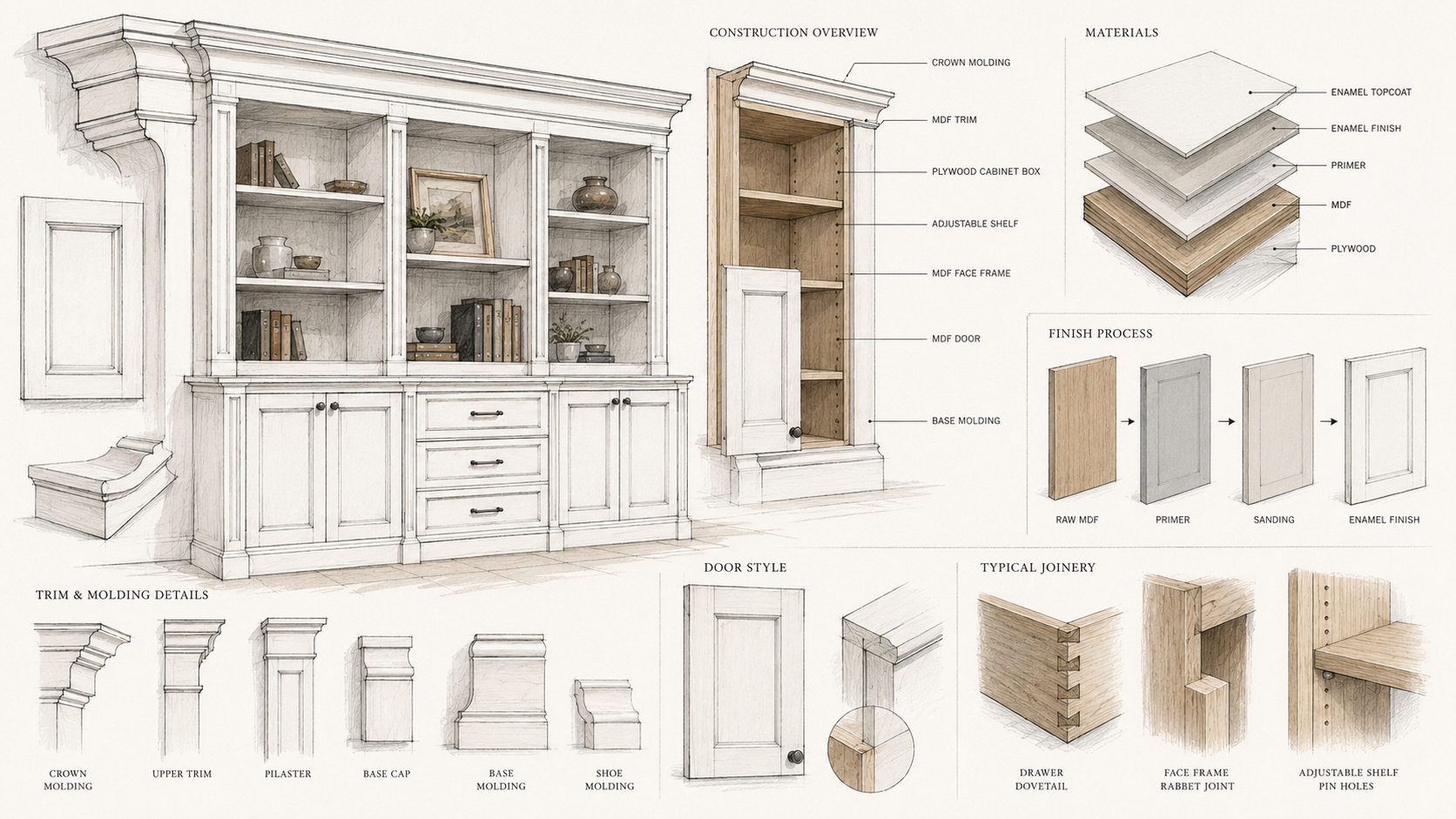
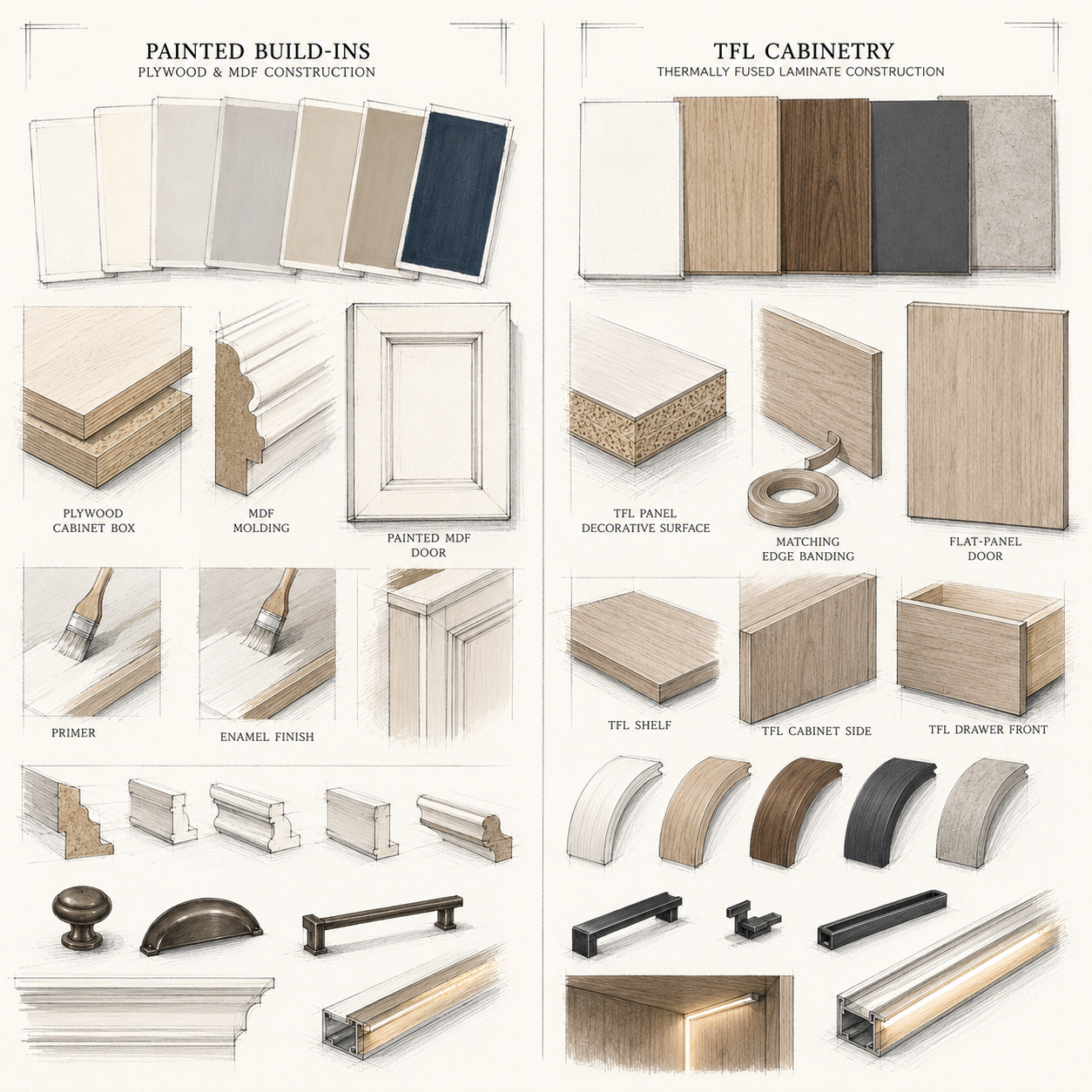
Painted custom built-ins follow the traditional construction method widely used in American homes. Cabinet boxes are commonly made from furniture-grade plywood, while doors, face frames, trim, moldings, and decorative components are made from MDF or solid wood.
After fabrication, the surfaces are prepared, primed, and finished with professional cabinet enamel. This creates a smooth painted surface and allows the cabinetry to match the wall color, interior trim, doors, or other architectural elements in the home.
Painted construction works well for projects that include:
Shaker-style or raised-panel doors
Face-frame cabinetry
Crown molding and decorative trim
Fluted details and architectural panels
Traditional bookcases
Fireplace surrounds
Custom paint colors
Built-ins designed to look original to the home
This construction method is a strong choice for traditional, transitional, coastal, farmhouse, and classic American interiors.
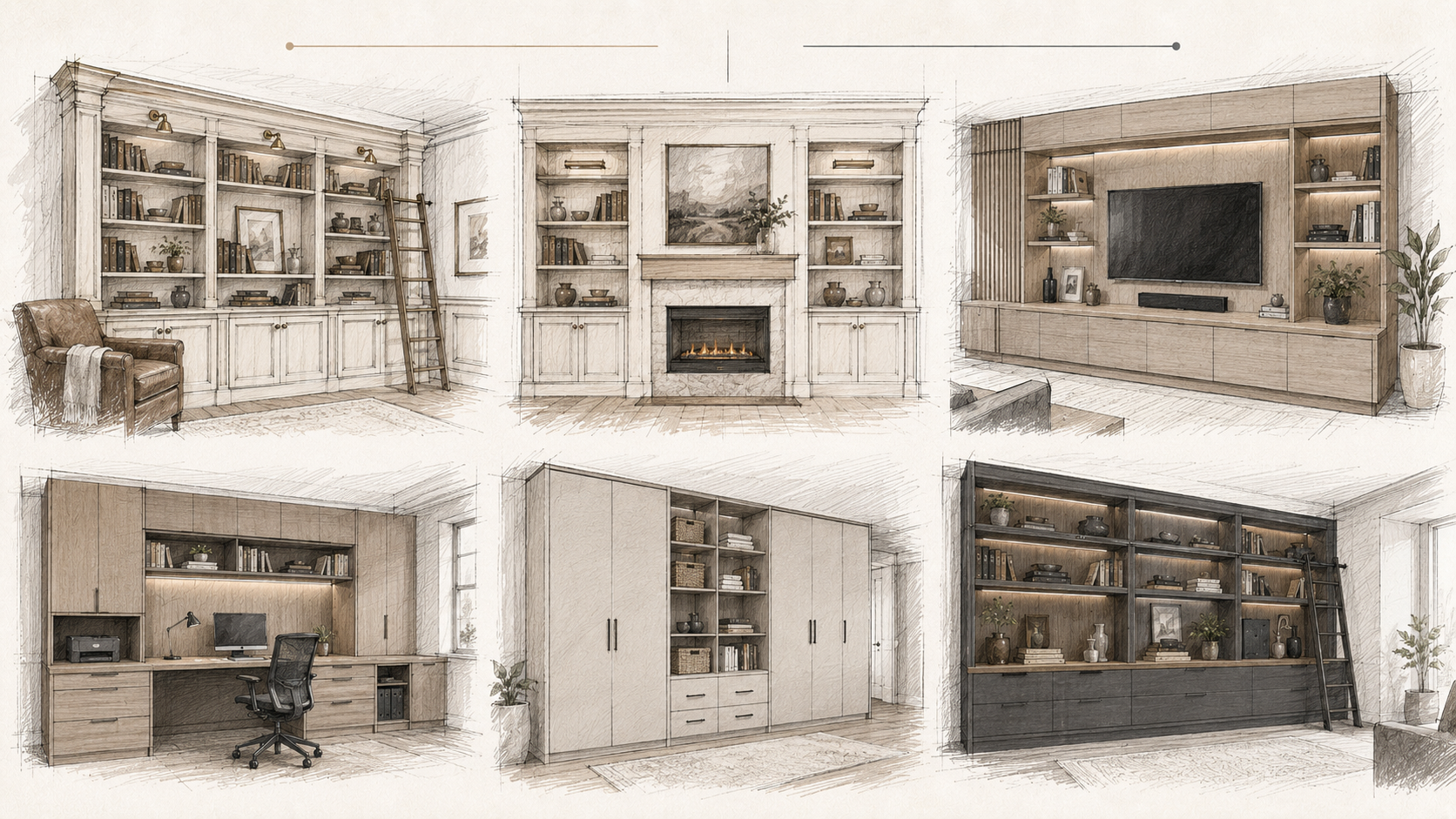
Painted cabinetry is often used for custom library walls with detailed trim, framed openings, decorative bases, and crown molding. It also works well for entertainment centers designed to coordinate with the architecture of the living room.
What Is TFL or Melamine Cabinetry?
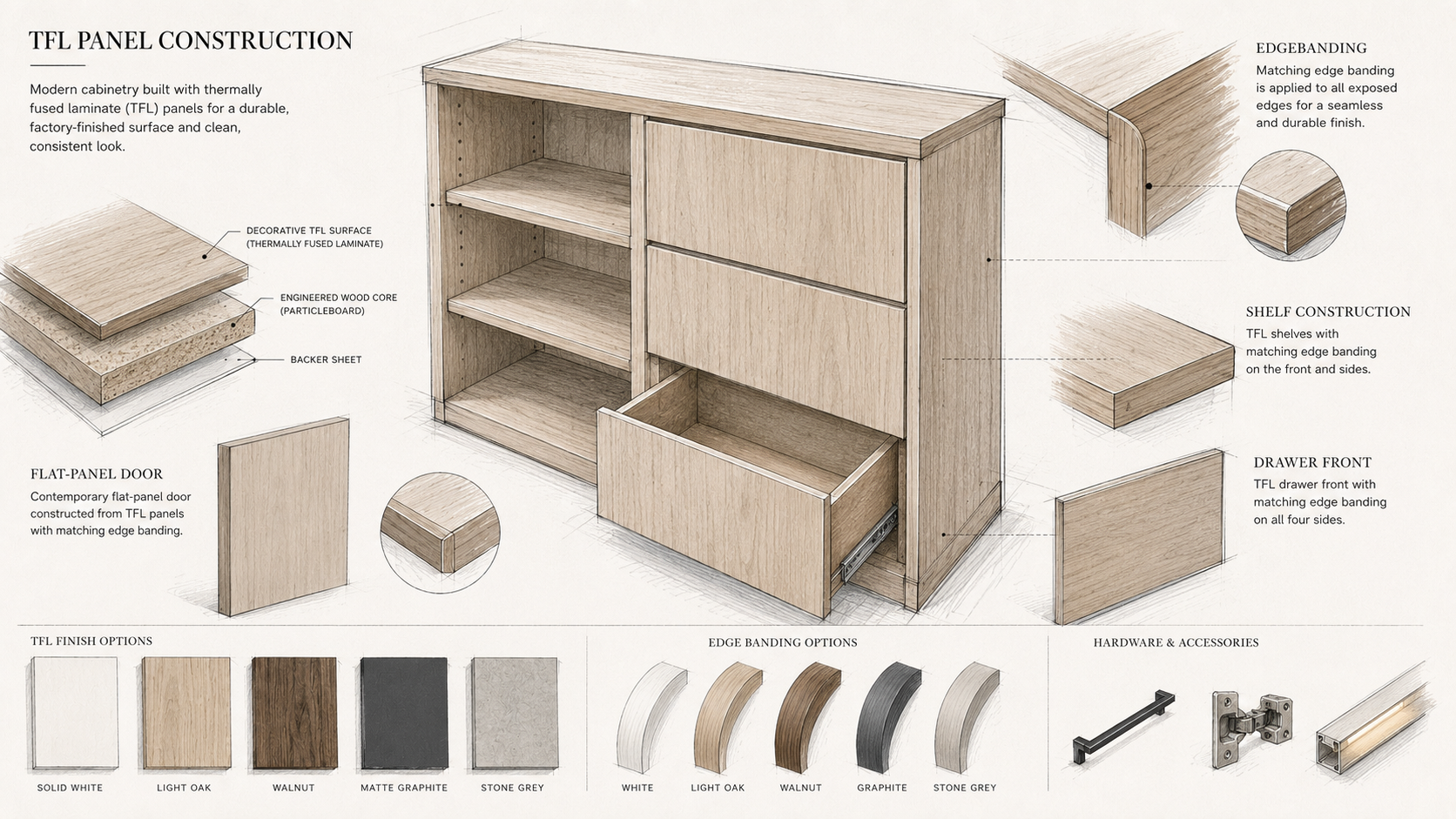
TFL stands for Thermally Fused Laminate. It is a decorative surface thermally bonded to an engineered wood panel during manufacturing. In residential cabinetry, these products are also commonly described as melamine panels.
The panels arrive with a finished surface, so they do not require primer or enamel paint. After the components are cut, coordinated edge banding is applied to the visible edges. The parts are then assembled into custom cabinets, shelves, drawers, and wall systems.
TFL panels are available in a broad selection of finishes, including:
Solid neutral colors
Matte white and black
Wood-grain patterns
Oak, walnut, and ash textures
Concrete and stone-inspired finishes
Linen and textile patterns
Contemporary low-sheen surfaces
This method is common in European cabinetry and has also become an established option in American residential and commercial interiors. TFL construction works especially well for clean, modern designs with flat surfaces and precise lines.
No. The core material alone does not determine the quality of the finished cabinetry.
Low-cost ready-to-assemble furniture and professionally fabricated custom cabinetry might both use an engineered wood core, but the panel quality, surface finish, hardware, edge treatment, engineering, fabrication accuracy, and installation process differ significantly.
A custom TFL built-in is designed for a specific room. The layout responds to the wall dimensions, ceiling height, storage needs, outlets, lighting, doors, windows, and existing architectural conditions.
Quality TFL cabinetry also includes:
Furniture-grade decorative panels
Precisely cut components
Coordinated edge banding
Professional cabinet hardware
Custom-sized shelves and compartments
Proper structural support
Accurate installation and alignment
A material does not make a project custom. The design, measurements, fabrication, detailing, and installation make the project custom.
Our completed projects show how custom-built systems combine materials, storage, lighting, and architectural planning to fit each individual space.
Painted Cabinetry vs. TFL: Appearance
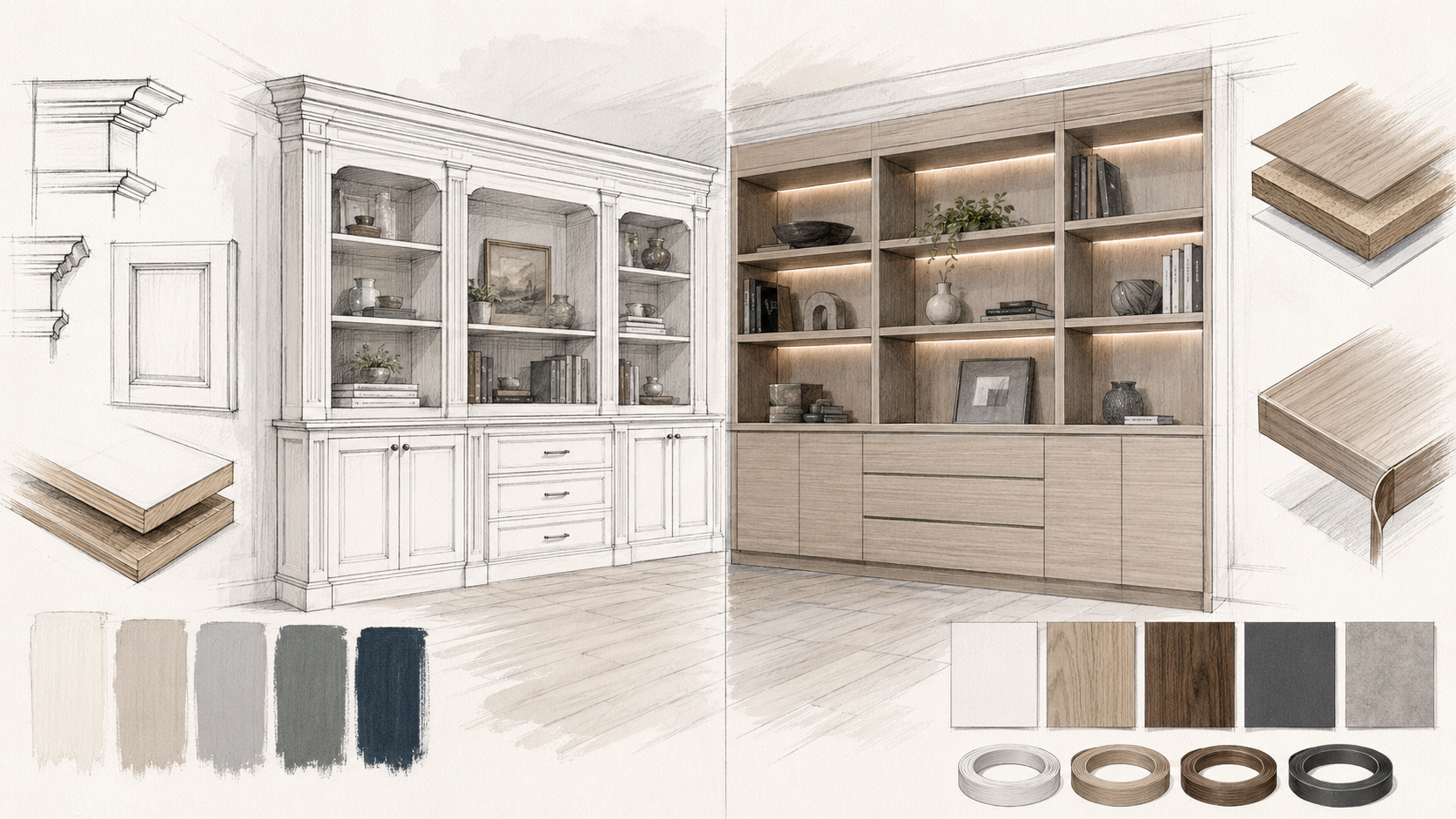
Painted cabinetry creates a smooth, continuous finish. It works well when the goal is to make the built-in look like part of the home’s permanent architecture.
Paint also supports detailed profiles, decorative molding, shaped components, framed cabinet doors, and other traditional millwork elements. A painted built-in may match an existing wall color or use a contrasting color as a focal point.
TFL has a factory-controlled finish with consistent color and texture across the project. It is best suited to flat-panel cabinetry, open shelving, modern storage systems, and clean geometric compositions.
TFL also offers realistic wood textures without requiring natural wood veneer or a stained finish. This allows a project to achieve a modern oak, walnut, or textured appearance with consistent pattern and surface quality.
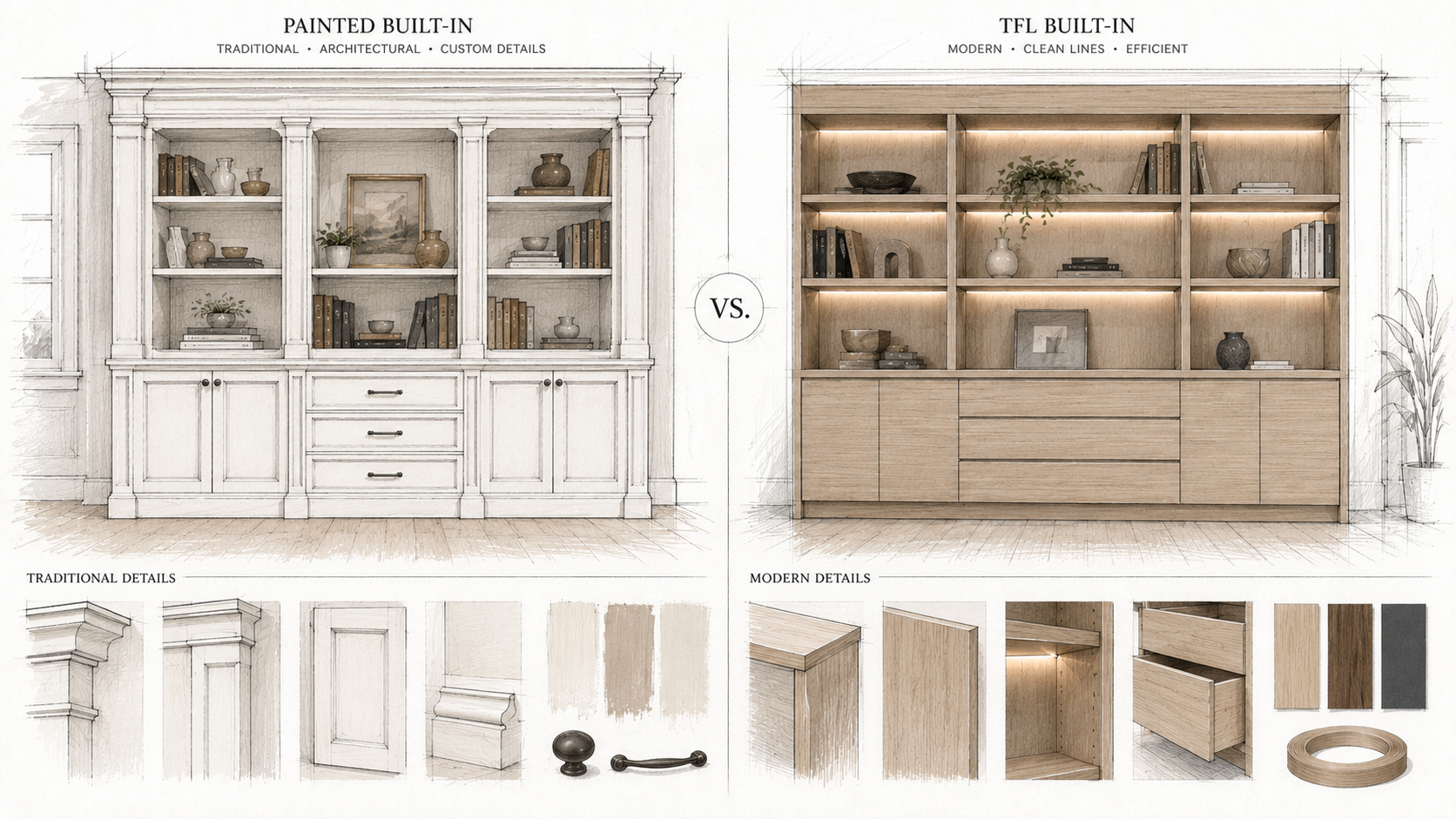
Neither option is automatically better. Painted construction supports architectural detail. TFL supports clean lines, consistent textures, and modern panel-based design.
Painted Cabinetry vs. TFL: Color and Finish Options
Painted built-ins offer nearly unlimited color flexibility. The cabinetry may be matched to a specific paint color, existing trim, wall finish, or interior palette.
This makes painted cabinetry a strong choice when exact color coordination matters.
TFL provides a curated range of factory-produced finishes. The available selection is not unlimited, but it includes many contemporary colors, wood grains, matte surfaces, and textured patterns.
A TFL finish often has greater consistency than a painted surface because the decorative layer is manufactured under controlled factory conditions. The same finish appears across doors, cabinet panels, shelves, and drawer fronts.
For modern projects, the selected panel texture often becomes part of the design rather than a substitute for paint.
Painted Cabinetry vs. TFL: Durability and Maintenance
Both systems perform well when the correct materials and hardware are selected.
Painted enamel creates a refined surface, but painted cabinetry requires reasonable care. Sharp impacts, repeated friction, and standing moisture may damage the finish. Minor damage is often repairable through touch-up or refinishing.
TFL surfaces resist many common stains, scratches, and everyday cleaning products. They are well suited to frequently used shelving, cabinet interiors, desks, closets, and storage systems.
TFL does not require repainting. Routine maintenance usually involves wiping the surface with a soft cloth and a mild household cleaner.
The edges and joints require proper fabrication and installation. High-quality edge banding is an important part of both the appearance and long-term performance of TFL cabinetry.
Painted Cabinetry vs. TFL: Design Flexibility
Painted plywood and MDF offer greater flexibility for decorative shapes and architectural details. MDF can be routed, profiled, layered, and combined with moldings to create traditional millwork.
This makes painted construction suitable for:
Arched openings
Decorative end panels
Shaker doors
Picture-frame molding
Crown molding
Traditional columns
Detailed fireplace cabinetry
TFL works best with straight lines, flat panels, rectangular compartments, modern doors, and clean transitions. It is well suited to:
Full-wall shelving
Floating cabinets
Modern home offices
Flat-panel doors
Display walls
Closets and wardrobes
Contemporary storage systems
TFL also allows different finishes to be combined within one system. For example, white cabinets may be paired with wood-textured shelves, dark drawer fronts, or a contrasting desktop.
Where Painted Built-Ins Work Best
Painted construction is often the right choice when the cabinetry needs to feel connected to the architecture of the home.
A traditional library might include painted bookcases, lower cabinets, face frames, crown molding, and decorative trim. A living room built-in might incorporate a fireplace, mantel, television, framed cabinet doors, and millwork that matches nearby windows or doors.
Painted cabinetry is also preferred when the homeowner wants a specific color that is not available as a factory-finished panel.
Common applications include:
Traditional library walls
Fireplace built-ins
Classic entertainment centers
Dining room cabinetry
Window-seat systems
Mudroom storage
Built-ins with detailed molding
For large living room installations, our entertainment center designs may use painted cabinetry, TFL panels, natural wood, or a combination of materials based on the selected style.
Where TFL Cabinetry Works Best
TFL is a strong choice for modern spaces that require substantial storage, clean organization, and consistent surfaces.
A modern library wall may include open illuminated shelving above flat-panel base cabinets. A home office may combine tall storage cabinets, file drawers, equipment compartments, a long desktop, and overhead shelving.
TFL also works well for full-room systems because the panels are available in coordinated finishes. Cabinet interiors, doors, shelves, and work surfaces may share the same color or use planned contrasts.
Common applications include:
Modern library walls
Home office cabinetry
Closets and wardrobes
Wall-to-wall storage
Display shelving
Flat-panel entertainment centers
Multipurpose storage rooms
Our home office built-ins are designed around work habits, equipment, document storage, available wall space, and cable management. TFL construction often fits these projects because it supports clean lines and durable work surfaces.
For larger organizational projects, custom storage wall systems combine open shelves, cabinets, drawers, work areas, and specialty storage within one coordinated installation.
Does TFL Cost Less Than Painted Cabinetry?
TFL cabinetry often requires fewer finishing steps because the decorative surface is already applied at the factory. There is no separate priming, sanding, and enamel-painting process.
This often makes TFL an efficient option for large modern installations with many panels, shelves, cabinets, and flat fronts.
Painted cabinetry generally involves additional labor for surface preparation and finishing. Decorative doors, face frames, molding, and architectural details also increase fabrication and installation time.
The final price still depends on:
Overall dimensions
Number of cabinets and drawers
Hardware selection
Lighting
Door style
Interior organization
Material collection
Installation conditions
Decorative details
TFL is not simply a low-cost substitute for painted cabinetry. It is a different construction system with its own design strengths.
Can Painted Cabinetry and TFL Be Combined?
Yes. Many projects benefit from a hybrid approach.
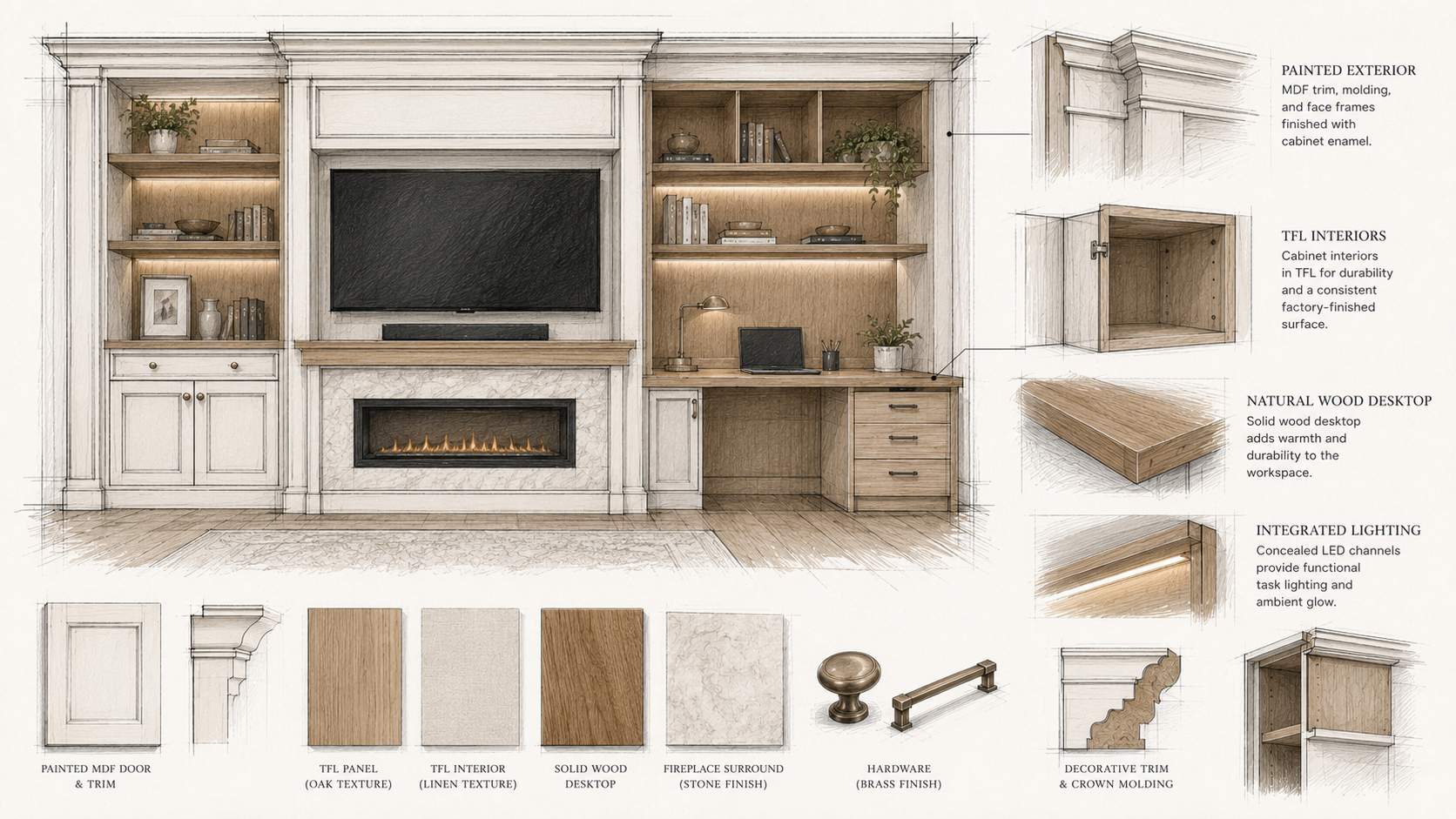
A built-in might use painted exterior panels and doors with durable TFL cabinet interiors. Another project might use TFL cabinetry with a natural wood desktop, stained shelves, painted trim, or an architectural wall treatment.
A combined system might include:
Painted face frames with TFL interiors
TFL cabinets with a natural wood countertop
Painted molding around modern flat-panel cabinetry
Wood-textured TFL shelving with painted base cabinets
TFL storage paired with decorative wall panels
Painted fireplace elements with factory-finished side cabinetry
The decision should follow the design rather than a fixed rule. Different materials can serve different functions within the same project.
Which Construction Method Should You Choose?
Choose painted plywood and MDF cabinetry when you want:
A traditional or transitional appearance
Decorative molding and architectural details
A specific custom paint color
Framed or profiled cabinet doors
A built-in that closely matches the trim of the home
Choose TFL or melamine panel cabinetry when you want:
A contemporary design
Flat-panel cabinets
Wood-grain or textured finishes
Consistent factory-finished surfaces
A large storage or shelving system
Efficient fabrication without field painting
The room, project type, design direction, and required function should guide the final choice.
How Custom Wall Design Plans Each Project
We begin by reviewing photographs, wall dimensions, ceiling height, project type, and inspiration images. We then evaluate the best layout, construction system, materials, storage configuration, and finish options.
The final recommendation might use painted cabinetry, TFL panels, natural wood, or a combination of materials. Our goal is to select the construction method that supports the appearance, function, durability, and budget of the project.
You can review our project portfolio to see completed libraries, offices, entertainment centers, and storage installations in different styles and materials.
Custom Wall Design serves homeowners within our current service area. Project availability depends on the location, scope, and installation schedule.
Whether painted cabinetry, TFL construction, or a combination of both is right for your project depends on the style of the home, storage requirements, budget, and installation conditions. We design and install custom built-ins throughout the Orlando area, Tampa Bay, and Florida’s Space Coast, adapting the construction method and layout to each home and project.
Start Planning Your Custom Built-In
A successful built-in starts with accurate information about the room and a clear understanding of how the finished system will be used.
Send us photographs of the wall, approximate dimensions, ceiling height, project location, and inspiration images. Our team will review the information and help determine whether painted cabinetry, TFL construction, or a hybrid approach fits the project.
Submit your details through our project request form to begin planning your custom library, home office, entertainment center, or storage wall.